Overview
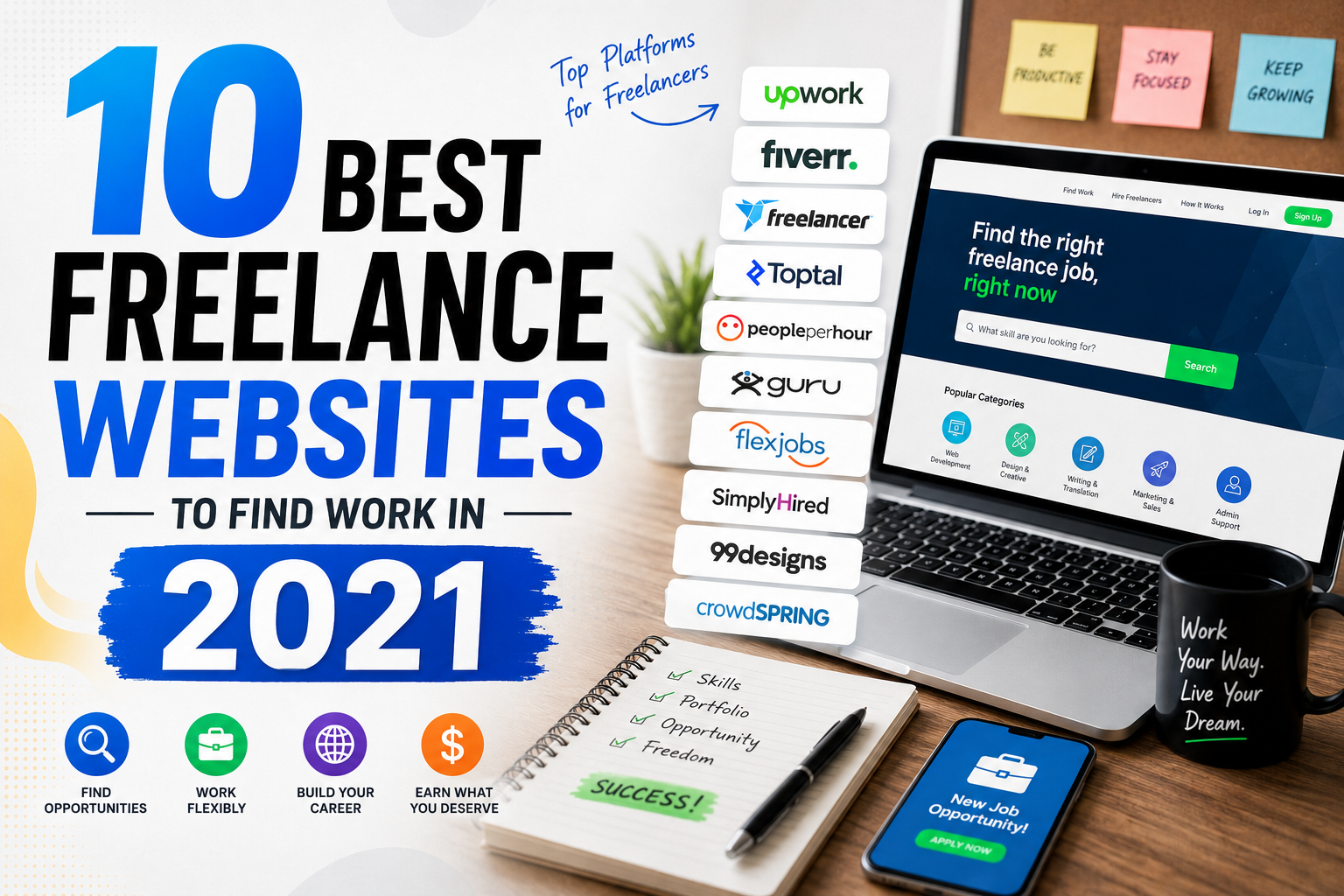
Top freelance websites to find work in 2021
Upwork was the obvious giant. It had volume, and volume matters when you're new. I remember a writer friend landing her first steady client there after sending 19 proposals in one weekend. Not glamorous. Effective. But the competition was fierce, and cheap bidders crowded the lower end. If you could write sharp proposals and keep your client reviews clean, it still worked.
Fiverr was a different beast. It leaned hard on packaged services. That helped people who could sell a clear offer fast: logo fixes, landing page audits, short video edits. But here's the twist. The people who did best weren't always the cheapest. They were the ones who made a small offer feel specific and useful. A buyer doesn't want "content writing." They want 4 product descriptions by Thursday.
And then there were niche boards. ProBlogger for writers. Dribbble Jobs for designers. Toptal for high-end developers. These sites didn't spray random leads everywhere. They narrowed the field, which saved time and raised the odds of getting clients who understood the work. Honestly, that's a gift. Less noise. Fewer weird messages asking for "exposure."
LinkedIn also deserved a place in any serious freelance hunt. It wasn't just a social site. It was a public proof machine. Your headline, your posts, your recommendations—they all worked like little trust signals. What I've noticed is that people often ignore it until a direct message from a real buyer lands in their inbox. Then suddenly it matters. Funny how that works.
Remote job boards were another smart layer. Sites like We Work Remotely and Remote OK often carried freelance-friendly roles, especially for developers, marketers, and operations folks. These weren't always classic gig posts. Some were contract-to-hire. Some were short-term retainers. But for freelancers who wanted fewer one-off jobs and more stable monthly income, they were gold.
And don't sleep on community-driven spaces. Slack groups, Facebook groups, Indie Hackers, even old-school forums. Messy? Sometimes. Useful? Absolutely. A friend of mine got a 3-month editing contract because she answered a simple question in a writing group at 11:40 p.m. No fancy funnel. No SEO trick. Just being there when someone needed help. Frankly, that's still how a lot of work gets found.
The smart move in 2021 was rarely "pick one site." It was build a stack. One marketplace for incoming leads. One niche board for better-fit jobs. One profile network for credibility. One outreach habit for momentum. That's the part people skip. They wait for the platform to do the heavy lifting. It won't.
Also, fee structures changed the game. Some platforms took a cut on every project. Others charged for visibility or bidding credits. That sounds boring until you run the numbers. On a 0 project, a 20% fee hurts. On a ,000 project, it hurts differently. So before you chase shiny logos, ask a dull but vital question: what's the real take-home after fees, taxes, and unpaid proposal time?
And yes, safety matters. Escrow protection, dispute systems, verified payments—those aren't just features on a sales page. They're the difference between sleeping well and refreshing your bank app at midnight. In my experience, freelancers who ignored this learned fast, and not in a pleasant way.
If you were starting from zero in 2021, the best path was usually simple: choose one broad marketplace, one niche board, and one place to showcase your work. Then send focused pitches, not generic blasts. Say exactly what problem you solve. Mention a result. Add a sample. Done.
Could you make money without any of these sites? Sure. But that takes more relationship building and more patience. For most people, the websites in 10bestfreelancewebsitestofindworkin2021 were the fastest bridge from empty calendar to paying client. And that bridge still needed you to walk across it.
✅ Advantages
The biggest advantage of the sites in 10bestfreelancewebsitestofindworkin2021 was reach. You could meet clients you’d never bump into locally. That matters, especially if you’re in a small city or just starting out. Another plus: speed. A good profile could pull in leads while you slept. Nice, right?
And some platforms gave you structure. Escrow, milestone payments, review systems, search filters. That kind of order helps when you're juggling invoices and deadlines. What I've noticed is that structure also lowers the emotional chaos. Less guessing. More action.
Niche platforms had a quieter advantage: better-fit buyers. A designer on Dribbble or a writer on ProBlogger often spends less time filtering junk. In my experience, that saves energy fast.
⚠️ Disadvantages
The downside? Competition. Tons of it. Big sites attract thousands of freelancers, and that can push prices down hard. You may see clients asking for five-star work at bargain-bin rates. Annoying. Sometimes insulting.
And fees can nibble away at profit. One platform’s cut, another platform’s subscription, then your own unpaid time writing proposals. By the end, a decent-looking contract can feel thin. Also, some sites reward speed over skill, which means people with polished systems can edge out people with stronger work.
Frankly, not every lead is real. You’ll run into ghosted chats, vague briefs, and bargain hunters who want a full brand package for . It happens more than people admit.
How to Get Started
2. Build a profile that says what you do in plain language. Use one clear service, one result, and one proof point.
3. Add samples. Even two or three strong pieces can beat a long bio.
4. Set pricing carefully. Start competitive, but don’t race to the bottom. That road gets ugly fast.
5. Apply to jobs daily. Short, specific pitches work better than recycled paragraphs.
6. Track replies. What I've noticed is that the second follow-up often matters more than the first.
7. After that, branch out to niche job boards, community groups, and cold outreach if you want more control over your pipeline.
8. Keep one spreadsheet. Leads, rates, response time, win rate. Boring. Useful.
Frequently Asked Questions
A: There wasn't one universal winner. Upwork worked for volume, Fiverr worked for packaged services, and niche boards worked for better-fit clients. Your skill type changed the answer.
Q: Were free sites enough?
A: Often, yes. But free didn't mean effortless. You still needed a strong profile, good samples, and fast replies.
Q: Should beginners use multiple sites?
A: Yes, but not too many. Two or three is plenty. Otherwise, you spend all day logging in and no time getting paid.
Q: How do you avoid bad clients?
A: Read the brief, check payment terms, and trust your gut. If the message feels sloppy or rushed, it usually is.
Q: Do reviews matter that much?
A: Absolutely. On most platforms, reviews act like social proof. One solid review can open more doors than a dozen empty claims.