Overview
Why shrinking sea ice is changing polar bear survival
When sea ice lasts longer, bears can hunt seals from the edge of the ice or from breathing holes. That hunting style is efficient. But once the ice melts, the bears don't just lose a meal. They lose access to the hunting method that made their bodies work in the first place. Honestly, that's the brutal part. Land looks like a fallback, but it usually isn't.
What can they eat on land? Very little that helps for long. Some bears scavenge carcasses, raid bird nests, or nibble on plants and berries. But those foods are low in fat and often seasonal. A berry patch sounds nice to us. For a 600-pound predator, it's a bad joke. And yes, some bears do manage to survive on land for a while, especially larger adults with better fat reserves, but survival isn't thriving.
Researchers and Arctic residents have watched this pattern for years. World Wildlife Fund and other conservation groups have described the same basic shift, shorter ice seasons, more time ashore, and more hungry bears moving around coastal areas. That's where the issue gets messy. Bears and people start sharing the same space. Garbage dumps, hunting camps, and villages become more tempting when the natural pantry is empty.
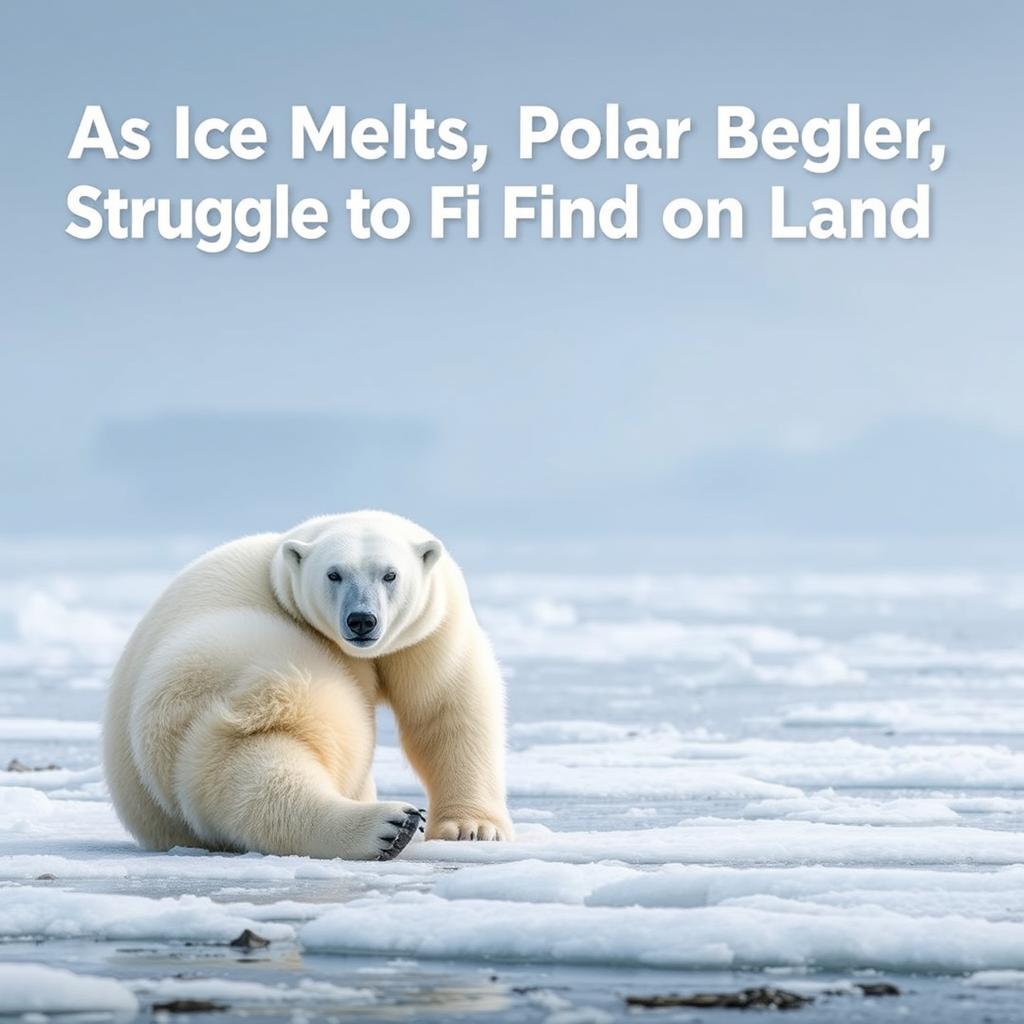
Frankly, the phrase As The Ice Melts Polar Bears Are Failing To Find Enough Food On Land also hides a timing problem. A bear can be healthy in spring and still struggle by late summer if the ice-free season drags on. That gap matters. In one field story that sticks with me, a local guide described a bear walking past a patch of tundra plants without even stopping. It wasn't picky. It was exhausted.
The science behind this is straightforward. Polar bears store fat during the hunting season, then live off those reserves when food is scarce. The trouble is that the fasting window is getting longer in many places. Longer fasting means less body weight, lower cub survival, and weaker reproduction. Cubs are especially vulnerable because a mother needs enough energy not only to live, but to nurse. No extra calories, no spare margin.
And the ripple effects don't stop there. Thin bears may travel farther, take bigger risks, or spend more time near human food sources. That can lead to conflict, and conflict often ends badly for the bear. So the phrase isn't only about hunger. It's about behavior, risk, and whether an Arctic predator can still fit its old habits into a newer, harsher calendar.
Some people assume polar bears can simply adapt. Maybe they'll switch diets. Maybe they'll become more terrestrial. I wouldn't bet on it. U.S. Fish and Wildlife Service guidance has long treated polar bear habitat as tightly tied to seasonal ice for a reason. Evolution moves slowly. The ice is changing fast. Much faster than a species that depends on a very specific hunting setup can easily adjust.
There's also a moral edge here. If the ice disappears, the bears aren't the only thing lost. The Arctic food web shifts too. Seals, foxes, birds, and even local communities feel the change. What I've noticed is that people sometimes talk about the bears as a symbol, and sure, they’re. But they're also a working animal in a working ecosystem. Their struggle is a signal, not a side note.
So when you hear As The Ice Melts Polar Bears Are Failing To Find Enough Food On Land, think of it as a chain reaction. Less ice. Less hunting. More hunger. More risk. The point isn't just that one species is in trouble. It's that the whole Arctic rhythm is being rewritten, one short summer at a time.
✅ Advantages
There aren't real advantages to the problem itself, but there are a few reasons this issue gets so much attention. First, it gives scientists a clear way to track climate change. Polar bears are visible, charismatic, and easy to recognize, so their struggles cut through the noise. That matters. People who ignore charts may still stop for a bear on the edge of the ice.
And that visibility can push better policy. When communities, researchers, and agencies focus on sea ice, they often improve monitoring, waste handling, and conflict prevention. In my experience, a strong symbol can move money faster than a dry report. So the "advantage" is really awareness. Not comfort. Not good news. Just a louder alarm bell.
⚠️ Disadvantages
The disadvantages are obvious, and they're serious. When As The Ice Melts Polar Bears Are Failing To Find Enough Food On Land, bears lose weight, cubs get fewer resources, and adults may travel dangerously close to people. That creates stress for both sides. A hungry bear near a village isn't a curiosity. It's a threat, and sometimes a fatal one for the animal.
And there's a bigger cost. The longer bears spend off the ice, the less time they have to hunt the food they evolved to catch. Land foods rarely fill the gap. Honestly, that's why the issue feels so unfair. The system is changing faster than the animal can cope. What looks like a simple hunger problem becomes a chain of weaker health, lower reproduction, and shrinking survival odds.
How to Get Started
2. Read a few reliable sources from WWF or government wildlife agencies. Compare what they say about ice loss and feeding behavior.
3. Look at Arctic maps and seasonal ice charts. The pattern jumps out fast. Less ice means less hunting time.
4. Watch for local conflict reports. Hungry bears near communities show how the problem reaches beyond wildlife.
5. Pay attention to climate change articles that connect warming, habitat loss, and food shortage. That's the wider frame.
6. If you want to go deeper, follow studies on cub survival and body condition. Those details show how hunger turns into population decline. Which part surprises you most?
Frequently Asked Questions
A: Because most land foods are too low in fat and too hard to find in enough quantity. A bear needs seal calories, not scraps.
Q: Do all polar bears suffer the same way?
A: No. Some regions lose ice earlier than others, and larger bears may cope longer. But the trend is rough almost everywhere.
Q: Are polar bears really an indicator species?
A: Yes. Their health reflects the condition of Arctic ecosystems, so changes in their behavior often point to broader environmental stress.
Q: Can conservation help?
A: It can reduce conflict and protect habitat, but it can't replace lost sea ice. That's the hard truth.