Overview
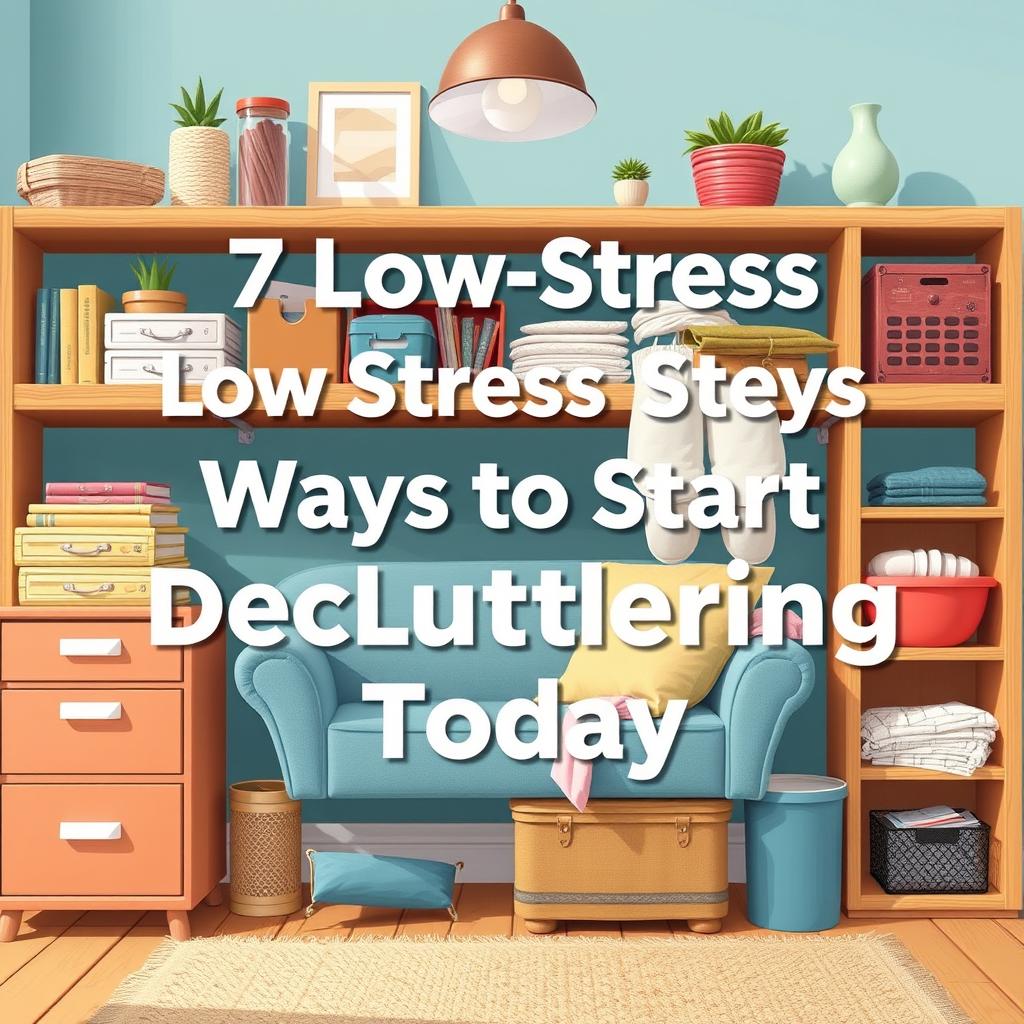
7 Low Stress Ways To Start Decluttering Without Overwhelm
The first method is the five-minute start. Set a timer, work until it ends, and stop. No heroic mood required. In my experience, this beats waiting for a free Saturday, because free Saturdays disappear fast. You’ll often do more once you begin, but even five minutes counts.
Second, use the “one container” rule. Grab one box, one bag, or one basket. Fill it with things you can donate, recycle, or move out of the room. That limits drift. No wandering from closet to closet. No sudden laundry detour. Just one container, one target, one decision path.
Third, sort by category instead of by room when the clutter is emotional. Papers, cords, books, mugs, cables, random chargers. Categories make patterns visible. I once helped a friend sort a kitchen junk drawer, and we found six duplicate pens, three dead batteries, and a key to an apartment she’d left four years earlier. Funny, until you realize clutter hides stories. But stories still take up space.
Fourth, create a “maybe” box. Not everything needs an instant yes or no. Put uncertain items in a sealed box, write the date on it, and revisit it in 30 days. If you didn’t need it, wear it, or think about it, let it go. Honestly, this step saves a lot of guilt. Some stuff just needs a timeout.
Fifth, use visual wins. Clear the kitchen counter corner. Make the entry table empty. Put shoes on a rack instead of the floor. These little resets change how the whole place feels. And they reduce the mental drag that comes from seeing clutter every time you walk by. It’s not about vanity. It’s about fewer interruptions.
Sixth, declutter the easiest duplicates first. Extra water bottles, spare spatulas, old notebooks, dried-up markers, mismatched lids. Duplicates are low-stakes practice. You don’t need a deep identity crisis over a cracked spoon. What I've noticed is that once people handle duplicates, they get better at harder choices too. The brain learns the pattern.
Seventh, pair decluttering with a routine you already do. After coffee, clear the sink. Before bed, reset the sofa. When you attach the task to something automatic, it stops feeling like a separate chore. That’s the quiet power of 7 Low Stress Ways To Start Decluttering. It works with your habits, not against them.
One contrarian thought: do less than you think you should. Most people overestimate what they can clear in one burst and underestimate what ten small sessions can do. A Tuesday morning bin run, a Thursday shelf sort, a Sunday paper stack. That rhythm builds confidence. And confidence is what keeps the process going.
If you want a cleaner home, don’t chase a perfect system first. Build a visible dent in the mess. Then another. That’s how simple routines turn into lasting order, and it’s why this method feels lighter than a full purge. You’re not wrestling the whole house. You’re nudging it in the right direction, one room, one bag, one decision at a time.
✅ Advantages
The biggest advantage of 7 Low Stress Ways To Start Decluttering is that it lowers resistance. Small steps feel possible, so you’re more likely to begin and finish. And once you see a clear surface, the next task feels less annoying. That’s real progress, not fake productivity.
Another benefit is better decision-making. When you work in short bursts, you make cleaner choices and avoid burnout. In my experience, people keep more useful items and toss fewer things they later regret. You also get quicker visual results, which can improve mood right away. A tidy counter can feel like a deep breath. It’s a small win, but it matters.
There’s also less emotional strain. You’re not forcing a giant purge, so there’s less guilt, less drama, and fewer halfway-finished piles on the floor.
⚠️ Disadvantages
The main drawback is that low stress can turn into slow progress if you never scale up. A five-minute session helps, but it won’t empty an attic. So if you need major change, you’ll have to repeat the process often.
And some people get stuck in “sorting mode.” They move items around, make tidy piles, then stop before anything leaves the house. That’s frustrating. Frankly, clutter only shrinks when stuff exits. Another issue is decision fatigue. Even gentle decluttering still asks you to choose, and that can feel tiring after work. If you’re already worn out, the boxes may sit untouched for a few days. That happens. The fix is to keep the task small, not to judge yourself for needing a break.
How to Get Started
2. Set a timer for five minutes. That keeps the job light and gives you a clear stop point.
3. Make three piles: keep, donate, toss. Keep the labels simple.
4. Use one container for anything leaving the room. A bag works fine.
5. Finish by resetting the space. Put the keep items back neatly and take the exit bag out immediately.
6. Repeat the same routine tomorrow. Consistency beats one big cleanout.
7. If you freeze on a hard item, place it in a “maybe” box and move on. Don’t stall the whole session.
What I’ve noticed is that people who start this way build confidence fast. And once the first win is visible, the next one feels less heavy.
Frequently Asked Questions
A: No. Start with one small zone and keep going only if you still have energy. That’s the whole idea behind 7 Low Stress Ways To Start Decluttering.
Q: What if I get sentimental about items?
A: Pause, take a photo, and use a “maybe” box. You’re allowed to go slowly.
Q: How often should I do this?
A: A few short sessions a week works well for most people. Honestly, regular five-minute bursts beat one exhausting cleanup.
Q: What should I declutter first?
A: Easy duplicates, obvious trash, and high-traffic spots like counters or entry tables. Those wins show up fast.
Q: Will this work for a very cluttered home?
A: Yes, but it’ll take repetition. Start smaller than feels necessary, then repeat the same path until it sticks.