
Overview
Hitting the Basics of Heres What To Know About The Devil Comet in 2026
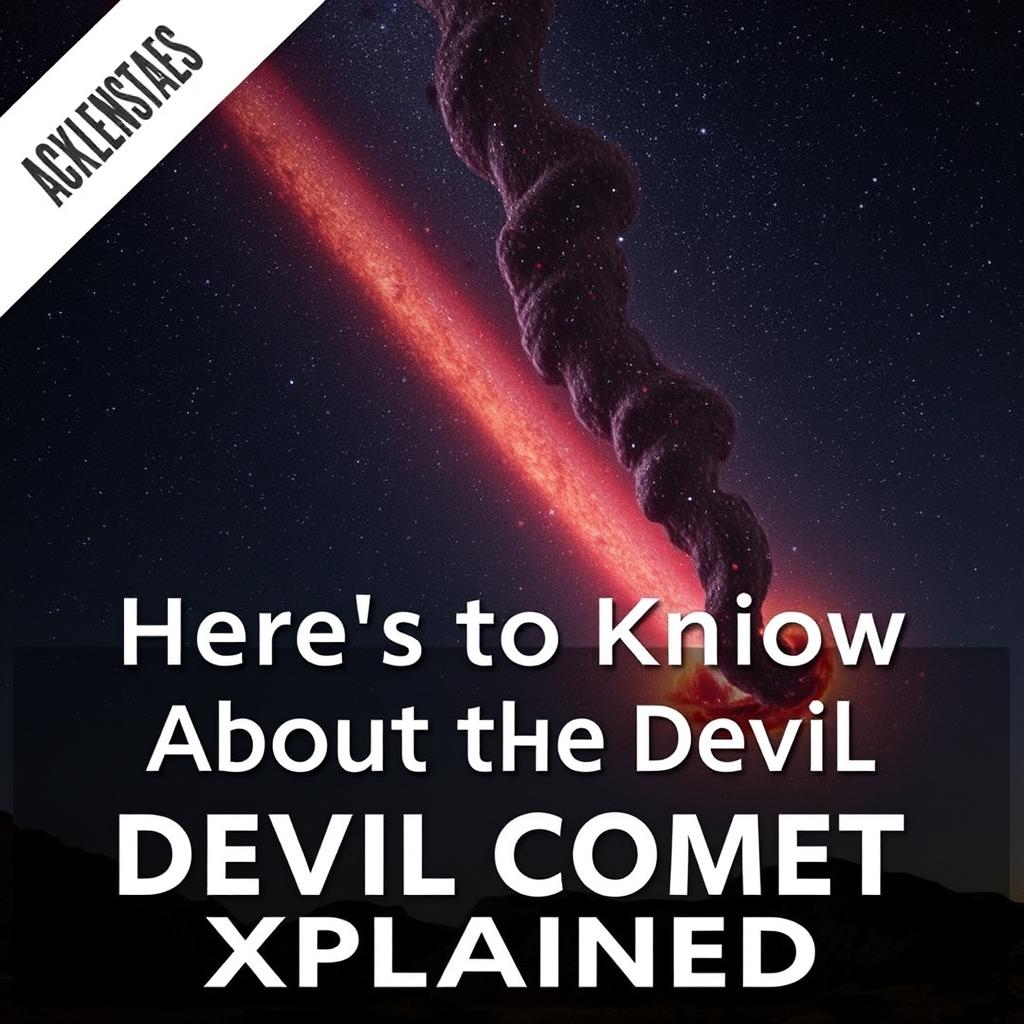
What’s actually happening? A comet is a dirty snowball, more or less. It’s a mix of ice, dust, and rock, and when it gets closer to the Sun, heat makes gas and dust jet out. Those jets can make the comet brighten suddenly. That’s the big reason Heres What To Know About The Devil Comet keeps showing up in headlines. It isn’t evil. It’s active.
And that activity matters. Some comets are steady and polite. This one can be dramatic. In my experience, that’s why even casual skywatchers care. A dim smudge is easy to ignore. A comet with a weird shape? People start taking photos from parking lots and backyards. I’ve seen that happen with a friend who swore he wasn’t into astronomy, then spent an hour trying to line up a telescope on a Tuesday night.
The orbit is part of the appeal too. 12P/Pons-Brooks is a periodic comet, so it returns on a long schedule rather than appearing once and vanishing forever. The exact viewing windows depend on where Earth is, where the comet is in its path, and how bright it gets. So if you’re chasing it, patience beats guesswork. What I’ve noticed is that people expect comets to behave like planets. They don’t. They’re messier, dimmer, and far less cooperative.
But don’t let the nickname trick you into thinking this is some rare cosmic monster. The “devil” label is just a human reaction to the shape, especially those flaring extensions that can look horn-like in certain images. It’s a visual effect, not a sign of danger. comet facts help cut through the drama, and so does a basic understanding of how gas jets work. Simple physics. Wild results.
There’s another reason the comet gets attention: it connects ordinary people to the night sky without needing a huge telescope. A dark site, binoculars, or a small backyard scope can be enough when the timing is right. I remember standing outside with a cheap pair of binoculars, freezing my fingers off, and still feeling like I’d found something private and huge. That’s the charm. You’re not just looking up, you’re watching a moving object that changes week by week.
So what should you actually watch for? First, brightness. Comets can be tricky because forecasts don’t always match reality. Second, the tail or coma, which is the glowing cloud around the nucleus. Third, the viewing conditions on Earth, because city lights ruin a lot more than people think. And yes, Sky & Telescope and International Astronomical Union style sources are useful when you want serious updates instead of viral speculation.
One contrarian take: the best thing about Heres What To Know About The Devil Comet might be that it isn’t photogenic every single night. That forces you to slow down. You check the sky. You check the charts. You wait. In a world that wants instant everything, a comet makes you earn the moment. Weirdly satisfying, right?
✅ Advantages
Heres What To Know About The Devil Comet gives skywatchers a real payoff without needing expert gear. A pair of binoculars can be enough on a good night, and that makes it accessible. It also teaches patience, which sounds boring until you’re outside under a clean black sky and the comet finally pops into view. Honestly, that first sight hits hard.
Another plus, it’s a great entry point into astronomy basics. You learn about orbits, brightness, and viewing conditions fast. And because the comet changes over time, you’ve got a reason to keep checking back instead of looking once and forgetting it. That ongoing change is half the fun.
⚠️ Disadvantages
Heres What To Know About The Devil Comet also comes with frustration. Comets are unpredictable, so a promising forecast can turn into a faint blur. That’s rough if you expected a flashy show. And light pollution can wipe out the view completely, even when the comet is technically there. Been there. It’s annoying.
Another downside, the internet tends to overhype everything. People see one dramatic photo and assume that’s what they’ll see with the naked eye. Often, it isn’t. You may need dark skies, a chart, and some patience. If you want instant spectacle, a comet can feel underwhelming. Are you okay with that?
How to Get Started
2. Pick a dark location. A backyard with streetlights nearby can work poorly. A park, hill, or open field is better.
3. Check the moon phase and weather. Clear skies matter more than fancy gear. Honestly, clouds ruin everything.
4. Use binoculars first if you have them. They’re easier than a telescope for wide, fuzzy objects.
5. Learn the surrounding stars. That helps you find the comet faster than guessing.
6. Give your eyes 15 to 20 minutes to adjust to darkness. No phone scrolling. That kills the view.
7. Keep checking over several nights. Heres What To Know About The Devil Comet is a moving target, and it can brighten or fade quickly.
Frequently Asked Questions
A: No. It’s just a comet with a dramatic nickname. The “devil” part is about appearance, not danger.
Q: Why does it sometimes look like it has horns?
A: Jets of gas and dust can make the coma look split or lopsided. Camera angles can exaggerate that, too. Space does love a trick shot.
Q: Can I see it without a telescope?
A: Sometimes, yes, but it depends on brightness and sky conditions. Binoculars usually help a lot.
Q: Why do people keep talking about it?
A: Because comet viewing feels rare, and this one has a weird, memorable shape. Also, the nickname sticks.
Q: Where should I check for updates?
A: Use trusted astronomy sources, observatory pages, or major science outlets. NASA and Sky & Telescope are solid starting points.