
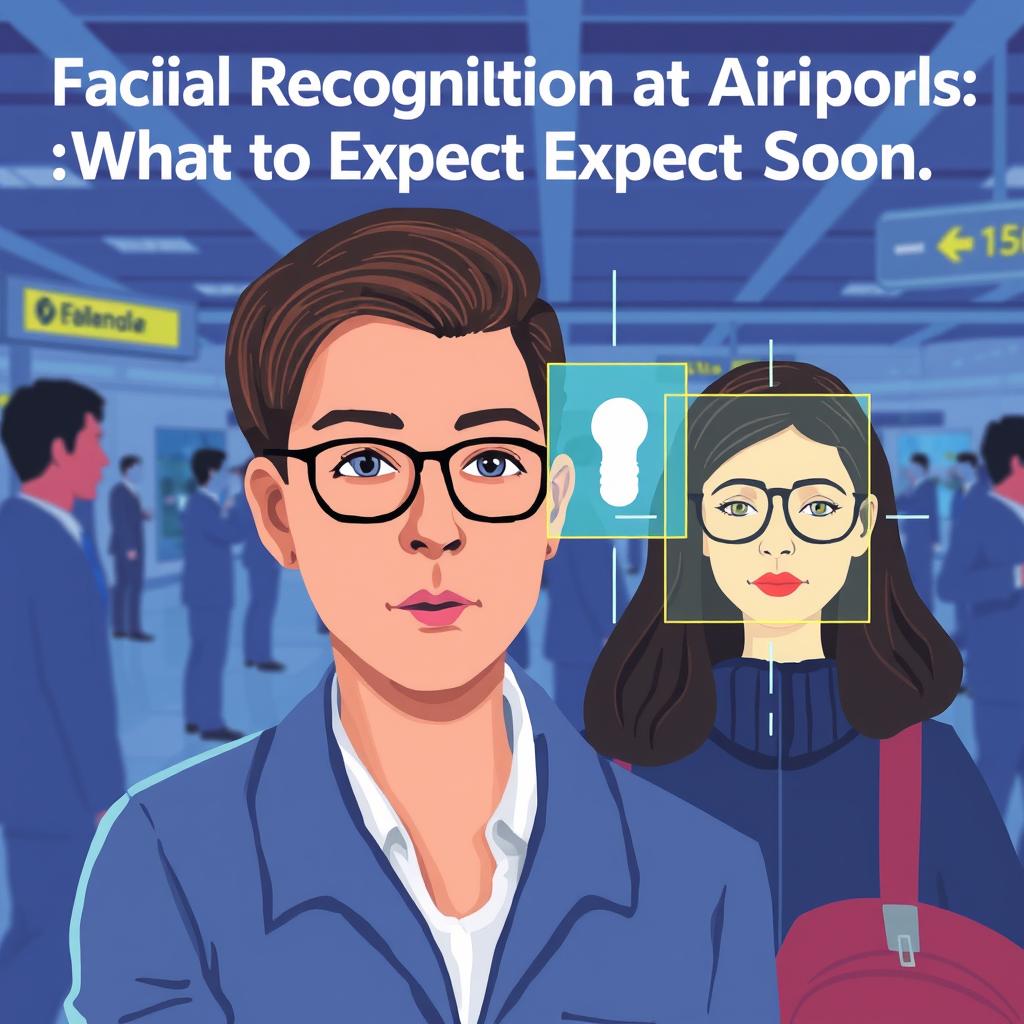
Overview
What Facial Recognition Coming Soon To An Airport Near You Really Changes
Airports like it because it can speed up boarding gates, reduce bottlenecks, and cut down on repetitive ID checks. Travelers like it when it works because it can shave minutes off a trip that already feels too long. But what I’ve noticed is this: people are fine with convenience until the process feels opaque. Then trust drops fast. Why is this camera here, who keeps the image, and how long is it stored?
The basic flow usually starts at check-in or a document checkpoint. You present a passport or other travel document once, then the system creates a face match later at security, boarding, or exit control. In the U.S., U.S. Customs and Border Protection has expanded facial comparison at many airports, especially for international arrivals and departures. Other countries use similar systems under different rules, and the details matter a lot.
And the details are where the debate lives. A face scan isn’t the same as a password. You can change a password in 30 seconds. You can’t swap out your face after a leak. That’s why privacy advocates keep asking about storage, retention limits, and third-party access. Frankly, that’s not paranoia. It’s common sense.
There’s also the issue of accuracy. Most modern systems work well enough for many travelers, but they’re not magic. Lighting, angles, aging, hats, glasses, and poor image quality can all throw things off. A friend of mine got held up for several minutes because the kiosk wanted a cleaner shot. Nothing dramatic, just awkward and slow. Multiply that by a packed terminal, and the inconvenience becomes obvious.
Still, facial recognition at airports doesn’t mean the same thing everywhere. Some systems are used only for verification, where your face confirms you’re the same person who already showed ID. Others are closer to biometric screening, where the face itself becomes a key part of entry control. That distinction matters. One is a shortcut. The other can feel like a gatekeeper.
And yes, the Transportation Security Administration has been part of the conversation too, especially around identity checks and digital screening pilots. But even when the tech is official, the traveler experience can vary wildly by airport, terminal, and line staff training. One airport feels smooth. Another feels like a science fair with bad Wi-Fi.
So what should travelers expect next? More cameras, more automation, and more places where your face replaces a boarding pass or an ID handoff. That doesn’t always mean mandatory use. In many cases, there’s an opt-out path, though it may not be obvious at first glance. Honestly, that lack of clarity is half the problem. People don’t mind choice, they mind confusion.
The broader argument is less about whether the technology works and more about how it’s governed. If airports are going to use facial recognition, they need clear signs, simple opt-out steps, short retention periods, and strong oversight. Without those guardrails, the system can feel like convenience with a hidden bill attached. And nobody likes hidden bills.
There’s a reason this topic keeps popping up in travel technology discussions. Airports are under pressure to move people faster, airlines want fewer delays, and governments want stronger identity checks. But the human side never goes away. A tired parent with two bags and a crying toddler doesn’t care about the architecture of biometric matching. They care about whether the line moves. Fair enough, right?
What I’ve noticed is that the best systems feel almost invisible. You walk up, glance, move on. The worst systems announce every step, fail on simple cases, and leave travelers wondering if they just gave up something private for a five-second gain. That’s the tension. And it’s not going away soon.
✅ Advantages
Facial Recognition Coming Soon To An Airport Near You can make travel faster, cleaner, and less repetitive. You don’t have to fumble for a boarding pass at every checkpoint, and that alone can cut stress. In my experience, a smoother flow matters most when airports are crowded and tempers are thin.
It can also reduce document handling, which helps in busy terminals where every extra handoff slows things down. For airlines and border officers, it can tighten identity checks and lower some manual errors. And when the process is clearly explained, many travelers accept it without much fuss.
⚠️ Disadvantages
Facial Recognition Coming Soon To An Airport Near You raises real privacy concerns, and those concerns aren’t abstract. A face is personal data, and once it’s collected, travelers want to know who holds it, how long it stays, and whether it’s shared. Honestly, those are fair questions.
Accuracy can also be uneven. Bad lighting, aging, disabilities, or a simple camera mismatch can slow people down. And if the opt-out path is hidden or poorly explained, the whole thing feels less like service and more like pressure. That’s a bad look for any airport.
How to Get Started
2. Read the airport or airline notice before you step into the line. What data is collected, and can you opt out?
3. Keep your passport or ID handy anyway. Even smart systems can fail, and backup documents save time.
4. If you’re uneasy, ask a staff member how the process works. I’ve done this myself, and a direct question usually clears things up fast.
5. Check the airport’s privacy policy or the official Transportation Security Administration guidance if you’re flying in the U.S.
6. Use the system only if you’re comfortable with it. Convenience is nice, but it shouldn’t feel forced.
Frequently Asked Questions
A: Yes, in many airports it already is. The rollout keeps growing, especially for identity checks and boarding.
Q: Can I refuse facial recognition at the airport?
A: Often yes, but the opt-out path may be different by airport or airline. Ask before you join the line.
Q: Is it the same as TSA scanning?
A: Not exactly. It’s usually a biometric identity check, though it can be part of a broader security or boarding process.
Q: Does it store my face forever?
A: Not usually, but retention rules vary. That’s why reading the posted policy matters.
Q: Will it replace passports?
A: Not anytime soon. For now, it mostly works alongside traditional travel documents, not instead of them.