Overview
What the social media laws fight could change next
And the question is simple only on paper: can a state tell a platform how to treat speech, or does that cross into unconstitutional territory? Lawyers on one side say the state is trying to dictate editorial choices. The other side says platforms aren't newspapers, and states can set rules for powerful companies that control modern public squares. That's the knife-edge.
What I've noticed is that people keep reaching for old analogies. Newspaper. Phone company. Mall. But social media isn't any of those things, and it's a bit of all of them at once. That's why the internet law crowd is watching so closely. A platform like Meta Platforms or X can amplify a message in seconds, bury it just as fast, and shape the public argument without ever writing a line of commentary. Wild, right?
The court has been here before, sort of. In one famous line of cases, judges have wrestled with whether online services are neutral conduits or speakers with their own rights. That distinction matters a lot. If a platform is speaking, forcing it to carry certain messages can look like compelled speech. If it's merely hosting user content, the state may have more room to regulate. That’s the whole ballgame.
But there's another wrinkle, and it's the one ordinary users feel first: moderation is imperfect. A Tuesday morning takedown can look like censorship to one person and basic housekeeping to another. Honestly, both can be true. Platforms remove spam, hate, impersonation, and fraud every day, yet they also make mistakes. Big ones. Tiny ones. The kind that explode on social media policy blogs and then end up in court records.
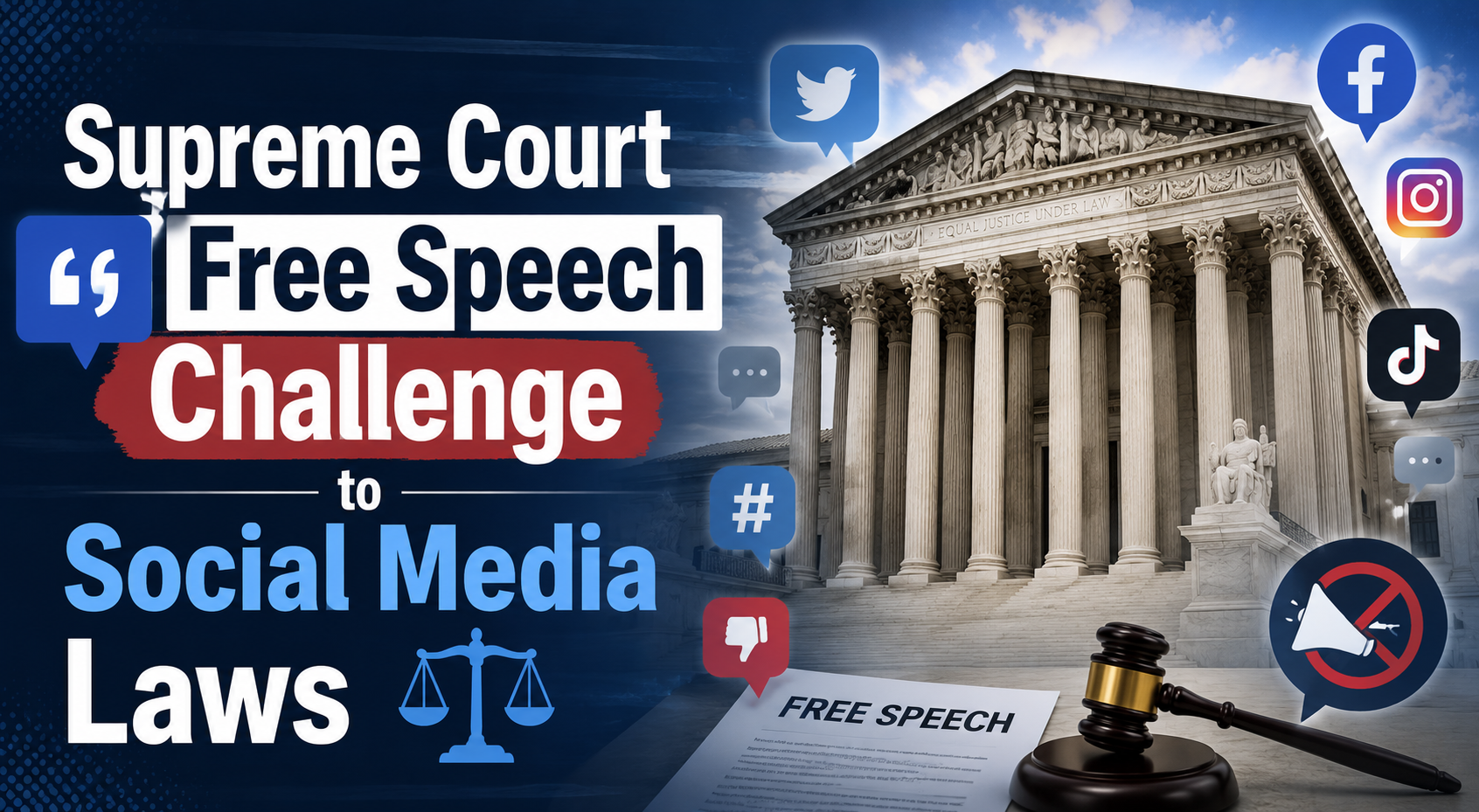
So when Supreme Court To Hear Free Speech Challenges To Social Media Laws in this upcoming review, the justices aren't just looking at a couple of statutes. They're looking at whether elected officials can use state power to steer what millions of people can say, read, or share online. And they’re doing it in a country where the internet is basically the public square, the town bulletin board, and the argument at the diner counter all mashed together.
In my experience, that’s why these cases get sticky fast. If the court leans too hard toward platform freedom, states may say the biggest companies are above accountability. If it leans too hard toward state control, platforms may be forced to carry speech they never wanted to host. Either way, somebody’s going to call foul. Maybe both sides. Maybe everyone.
Yet this isn't just about giants and lawyers. It's also about the everyday rules that decide what shows up in your feed, what gets labeled, and what gets deleted before anyone sees it. And that's why this case matters beyond the legal journals. It’s about who gets to shape online speech in 2025. Who's really in charge here?
✅ Advantages
One upside of Supreme Court To Hear Free Speech Challenges To Social Media Laws in public view is clarity. Users, platforms, and lawmakers all get a cleaner rulebook, or at least a better map. Right now, platform moderation feels like a patchwork of state laws, court orders, and company policies. Messy. If the justices draw a line, that line could reduce guesswork and future lawsuits.
And there’s a democratic upside too. A hard ruling can stop states from nudging speech rules in ad hoc ways. In my experience, legal uncertainty helps nobody except lawyers. A clear decision may protect online expression and keep one state from setting a national standard by accident. That matters. Especially when Supreme Court decisions tend to echo for years.
⚠️ Disadvantages
The downside is just as obvious. A broad ruling could freeze useful regulation and leave users stuck with platform decisions they can't challenge. That’s not nothing. If the court treats every moderation choice like protected speech, lawmakers may lose tools for tackling fraud, discrimination, and algorithmic abuse.
But the other risk cuts the other way. If the state wins too much power, platforms may be forced to host speech they strongly oppose, and that can slide into compelled speech fast. Honestly, that's a dangerous road. One bad precedent, and you're stuck with it for a generation. Legal gray zones don't stay gray forever; they harden. And then everyone complains later.
How to Get Started
2. Compare the state law at issue with the platform's moderation policy. Look for the exact conflict, not the headlines.
3. Check summaries from Electronic Frontier Foundation, American Civil Liberties Union, or the Supreme Court of the United States for plain-language context.
4. Pay attention to whether the case frames platforms as speakers, hosts, or something in between. That label changes everything.
5. Watch for later lower-court reactions. A ruling on a Tuesday can reshape internet governance by Friday.
6. If you follow this for work, save the key citations now. You'll thank yourself later.
Frequently Asked Questions
Why does this matter? Because the ruling could change what platforms must host, remove, or label. And that affects millions of users.
Are social media companies treated like newspapers? Not exactly. That’s one of the fight's biggest questions, and courts have struggled with it for years.
Could the decision affect regular users? Absolutely. If the rules change, your posts, warnings, takedowns, and account suspensions could all look different.
Will this settle everything? Probably not. But it could set the baseline for years, and lower courts will likely build around it.