• Privacy Policy
  • Contact us
  • Terms
Magazine X Time
  • Home
  • News
  • Tech
  • Lifestyle
  • All Magazines
No Result
View All Result
Magazine X Time
  • Home
  • News
  • Tech
  • Lifestyle
  • All Magazines
No Result
View All Result
Magazine X Time
No Result
View All Result
Home Lifestyle

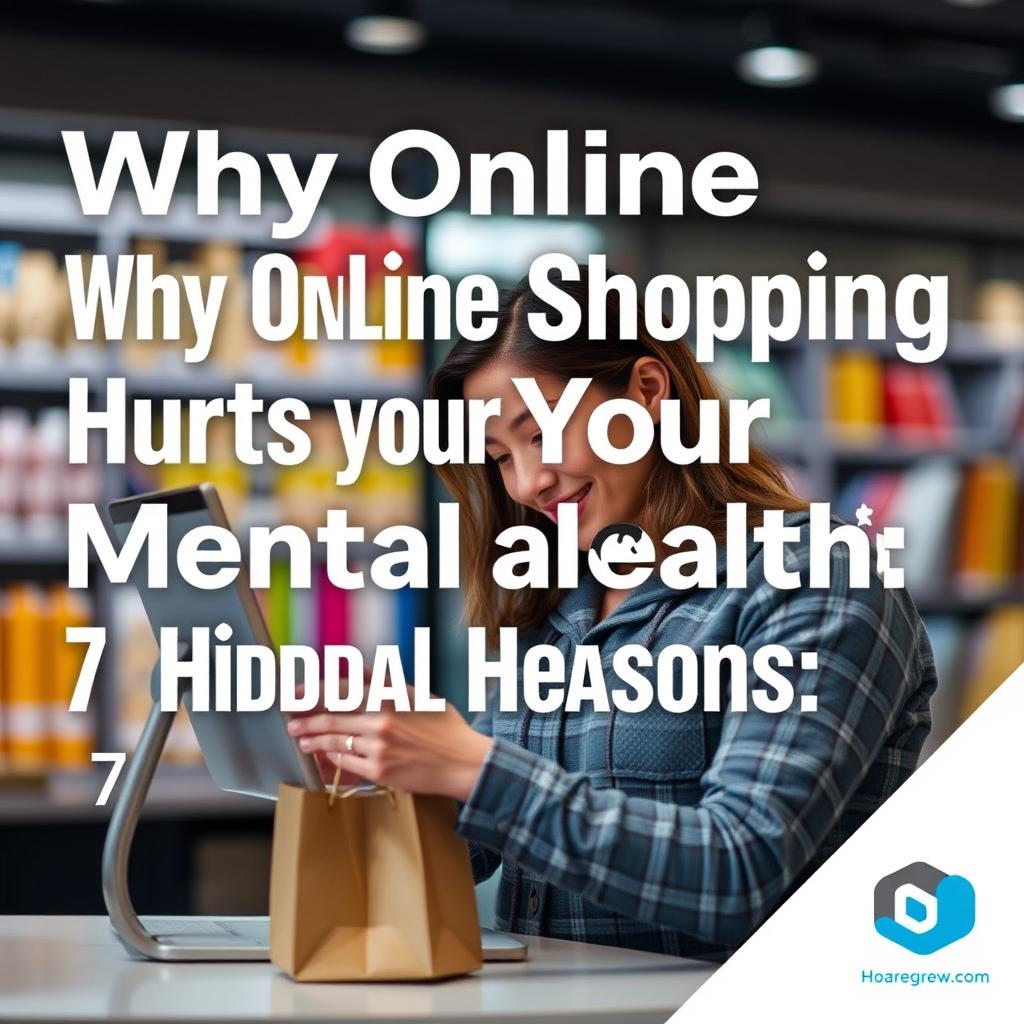
Why Online Shopping Hurts Your Mental Health: 7 Hidden Reasons

Magazine X Time by Magazine X Time
October 7, 2026
in Lifestyle
0 0
0
Why Online Shopping Hurts Your Mental Health: 7 Hidden Reasons
ADVERTISEMENT
Why Online Shopping Is Tanking Your Mental Health is simple, sneaky, and all too common. Every tap, swipe, and one-click checkout can chip away at your mood, your attention span, and your sense of control. Honestly, I’ve watched friends feel weirdly flat after a “quick” browsing session that turned into a late-night spending spiral. It’s not just about money. It’s about social media pressure, constant alerts, and the way stores push your brain toward impulse buys. In this article, we’ll unpack the real triggers and the fixes that actually help.

Overview

Online shopping can drain your mood by feeding comparison, urgency, and impulse spending. Why Online Shopping Is Tanking Your Mental Health usually starts with tiny habits, then grows into stress, guilt, and poor sleep. And the cycle gets worse when your phone becomes a pocket-sized mall. What I’ve noticed is that people often blame willpower, but the real problem is a design trick. A few small changes can help you shop with more control and less regret.

Why Online Shopping Is Tanking Your Mental Health at Home

Why Online Shopping Is Tanking Your Mental Health starts with a simple pattern: platforms make shopping feel effortless, then they make stopping feel hard. That’s the trap. You open an app for socks and end up comparing yourself to strangers, saving items you don’t need, and wondering why your brain feels buzzy at 11:47 p.m. It’s not weakness. It’s impulse buying mixed with endless choice and a machine built to keep you scrolling.

The first hit is often emotional, not financial. Many people shop when they feel bored, lonely, stressed, or stuck, and online stores are ready for that exact moment. They never say, “Maybe sit with that feeling for a minute.” They say, “Limited stock.” “Only 2 left.” “Buy now.” Frankly, that pressure works because the brain hates missing out, and it loves quick relief.

Then comes comparison. You see a “perfect” living room, a flawless skincare shelf, or a person wearing the sweater you just added to cart. Suddenly your normal life looks dull. That’s where comparison culture gets expensive. You’re not just buying a product, you’re buying the mood that product seems to promise. And that promise is usually fake. Ask yourself, have you ever felt calmer after buying the thing, or just briefly distracted?

A tiny story. A friend of mine used to browse home goods during lunch breaks. At first it felt harmless, even relaxing. Three months later, she had three storage bins, two lamps, and a credit card bill she kept “forgetting” to open. The items weren’t the problem. The habit was. The app had become a stress machine dressed up as convenience.

Sleep gets hit next. Late-night shopping keeps your mind lit up, your body awake, and your judgment soft. Blue light plays a part, sure, but the bigger issue is mental stimulation. You’re deciding, comparing, second-guessing, and hunting for discounts when your brain should be powering down. If you’ve ever told yourself “just one more tab,” you already know how fast an hour disappears.

And don’t ignore the guilt loop. A package arrives. You feel a lift. Then the receipt email lands, or the charge posts, or you realize you bought the wrong size again. That’s when Why Online Shopping Is Tanking Your Mental Health turns from a headline into a headache. Some people respond by shopping again to feel better. Bad trade. Very expensive comfort.

There’s also the clutter effect. Physical clutter is loud. It sits in your hallway, under your desk, and on your kitchen chair. Mental clutter is quieter, but just as real. Every unused object can become a tiny reminder that you spent money on something that didn’t solve the problem. Multiply that by ten or twenty packages, and your home starts feeling less like a rest stop and more like a warehouse.

The fix isn’t “never shop again.” That’s unrealistic, and honestly, a little dramatic. The better move is to slow the loop down. Put a 24-hour pause between finding an item and buying it. Remove saved cards from your browser. Turn off push notifications. If you need Apple or Google reminders for spending limits, use them. Small friction helps. It gives your thinking brain a chance to catch up.

And yes, the design matters. Retail apps use recommendation engines, personalized ads, and frictionless checkout to make buying feel natural. That’s a lot of digital habits stacked against a tired person on a Tuesday night. In my experience, when people blame themselves only, they miss the bigger point: the environment is doing half the work. If the room keeps handing you cake, willpower gets old fast.

One more thing. Shopping can be fun, and I’m not pretending it’s evil. A new pair of shoes or a useful gadget can genuinely solve a problem. But when browsing becomes a default coping tool, it starts borrowing from your focus, your sleep, and your peace. That’s the part worth noticing before it turns into a pattern you have to clean up later.

✅ Advantages

Online shopping does have real perks, and pretending otherwise helps no one. It saves time, gives access to hard-to-find items, and can be easier for people who hate crowded stores or have mobility limits. What I’ve noticed is that it also helps with quick price checks, which is useful when you’re trying to avoid overspending.

It can also reduce stress when you need one specific item fast. That matters. The problem isn’t shopping itself, it’s the way endless browsing turns convenience into a habit. Used carefully, Amazon and other big retailers can make life simpler, not messier.

⚠️ Disadvantages

The downsides hit fast. Online shopping encourages impulse buys, feeds comparison, and makes it too easy to spend without feeling the money leave. That disconnect is a big reason Why Online Shopping Is Tanking Your Mental Health. You’re also exposed to constant promotions, countdown timers, and “recommended for you” feeds that never really end.

And there’s the aftershock: clutter, regret, package tracking obsession, and sleep loss from late-night browsing. Honestly, the worst part is how normal it starts to feel. A quick check becomes a coping ritual, then a habit, then a drain on your attention.

How to Get Started

1. Notice your trigger. Before you open a store app, ask why you’re there: boredom, stress, or a real need?

2. Add a pause. Put items in your cart, then wait 24 hours. If you still want them tomorrow, fine.

3. Cut the cues. Turn off shopping notifications, unsubscribe from promo emails, and remove saved payment info.

4. Set a spending line. Use a weekly cap for nonessential buys. Keep it simple. Write it down.

5. Replace the habit. When the urge hits, try a walk, a text to a friend, or five minutes with screen time limits.

6. Review your wins. Every week, check what you skipped and what you actually used. That feedback matters more than a perfect streak.

Frequently Asked Questions

Why Online Shopping Is Tanking Your Mental Health because it combines convenience with constant temptation. The brain likes quick rewards, and retail apps are built to deliver them again and again.

Can online shopping really affect mood? Yes. It can raise stress, trigger guilt, and make you feel out of control, especially when you shop to escape a bad mood.

What helps most? Fewer notifications, a waiting period before buying, and a clearer budget. Honestly, the goal isn’t perfection. It’s breaking the loop before it becomes your default response.

Is all online shopping bad? No. If you buy with purpose and stop when you’re done, it’s a tool, not a trap.



Final Thoughts

If Why Online Shopping Is Tanking Your Mental Health sounds familiar, start small today. Don’t try to fix everything in one sitting. Pick one cue to remove, one spending rule to test, and one replacement habit that doesn’t involve a cart. In my experience, that’s how people regain control without turning life into a punishment. And if you keep slipping, that’s a signal, not a failure. What’s one trigger you can cut this week?

Like this:

Like Loading…
Tags: Mental Health
Previous Post

Why Online Shopping Is Hurting Your Mental Health

Magazine X Time

Magazine X Time

Shakil Ahamed — founder of Magazine X Time. Writing about technology, productivity tools, and how-to guides. Knowledge is power; read, build, share.

Leave a Reply Cancel reply

Your email address will not be published. Required fields are marked *

I agree to the Terms & Conditions and Privacy Policy.

  • Trending
  • Comments
  • Latest
Top 9 Highest Paid Athletes In The World

Top 10 Highest Paid Athletes In The World In 2022

February 3, 2022
5 Best Adsense Optimized WordPress Themes Free 2022

5 Best Adsense Optimized WordPress Themes Free 2022

January 31, 2022
20 Health Tips For Healthy Living In 2022

20 Health Tips For Healthy Living In 2022

January 31, 2022
The-Devil-Wears-Prada

Reviving fondness of vogue through reading

June 5, 2026
10 Richest People in the World (2022)

10 Richest People in the World (2022)

6
The-Devil-Wears-Prada

Reviving fondness of vogue through reading

3
20 Health Tips For Healthy Living In 2022

20 Health Tips For Healthy Living In 2022

3
10 Inspirational Technology Quotes

10 Inspirational Technology Quotes

3
Why Online Shopping Is Hurting Your Mental Health

Why Online Shopping Is Hurting Your Mental Health

October 6, 2026
Love, Hate, or Fear It: TikTok Has Changed America

Love, Hate, or Fear It: TikTok Has Changed America

October 5, 2026
How to Start Foraging, According to TikTokers

How to Start Foraging, According to TikTokers

October 4, 2026
Menopause Is Finally Going Mainstream: What It Means Now

Menopause Is Finally Going Mainstream: What It Means Now

October 3, 2026

Recent News

Why Online Shopping Is Hurting Your Mental Health

Why Online Shopping Is Hurting Your Mental Health

October 6, 2026
Love, Hate, or Fear It: TikTok Has Changed America

Love, Hate, or Fear It: TikTok Has Changed America

October 5, 2026
How to Start Foraging, According to TikTokers

How to Start Foraging, According to TikTokers

October 4, 2026
Menopause Is Finally Going Mainstream: What It Means Now

Menopause Is Finally Going Mainstream: What It Means Now

October 3, 2026
magazine x time

Welcome to Magazine X Time. You can find the latest news and web-related posts here. Knowledge is Power and reading book is more good for gain knowledge. You can use this like book as well

Follow Us

Browse by Category

  • Apps
  • Artificial Intelligence
  • Business
  • Freelancing
  • Gadget
  • Games
  • Health
  • Lifestyle
  • Mobile
  • Motivational
  • News
  • Science
  • Startup
  • Tech
  • Tips
  • Web
  • WordPress
  • World

Recent News

Why Online Shopping Is Hurting Your Mental Health

Why Online Shopping Is Hurting Your Mental Health

October 6, 2026
Love, Hate, or Fear It: TikTok Has Changed America

Love, Hate, or Fear It: TikTok Has Changed America

October 5, 2026
  • Privacy Policy
  • Contact us
  • Terms

All rights reserved © 2026 Magazine X Time · Built by Shakvaro

Welcome Back!

Login to your account below

Forgotten Password?

Retrieve your password

Please enter your username or email address to reset your password.

Log In
No Result
View All Result
  • Home
  • News
  • Tech
  • Lifestyle
  • All Magazines

All rights reserved © 2026 Magazine X Time · Built by Shakvaro

This website uses cookies. By continuing to use this website you are giving consent to cookies being used. Visit our Privacy and Cookie Policy.
%d